
And yes, the land had to be conquered as well. After having struggled for so long to try to find what remains of the Weser Path between Porta Westfalica and Bremen, I went through all the stages in the early part of the year, but this time from north to south. Not many signs left, so I will have to see about publishing the results sometime.
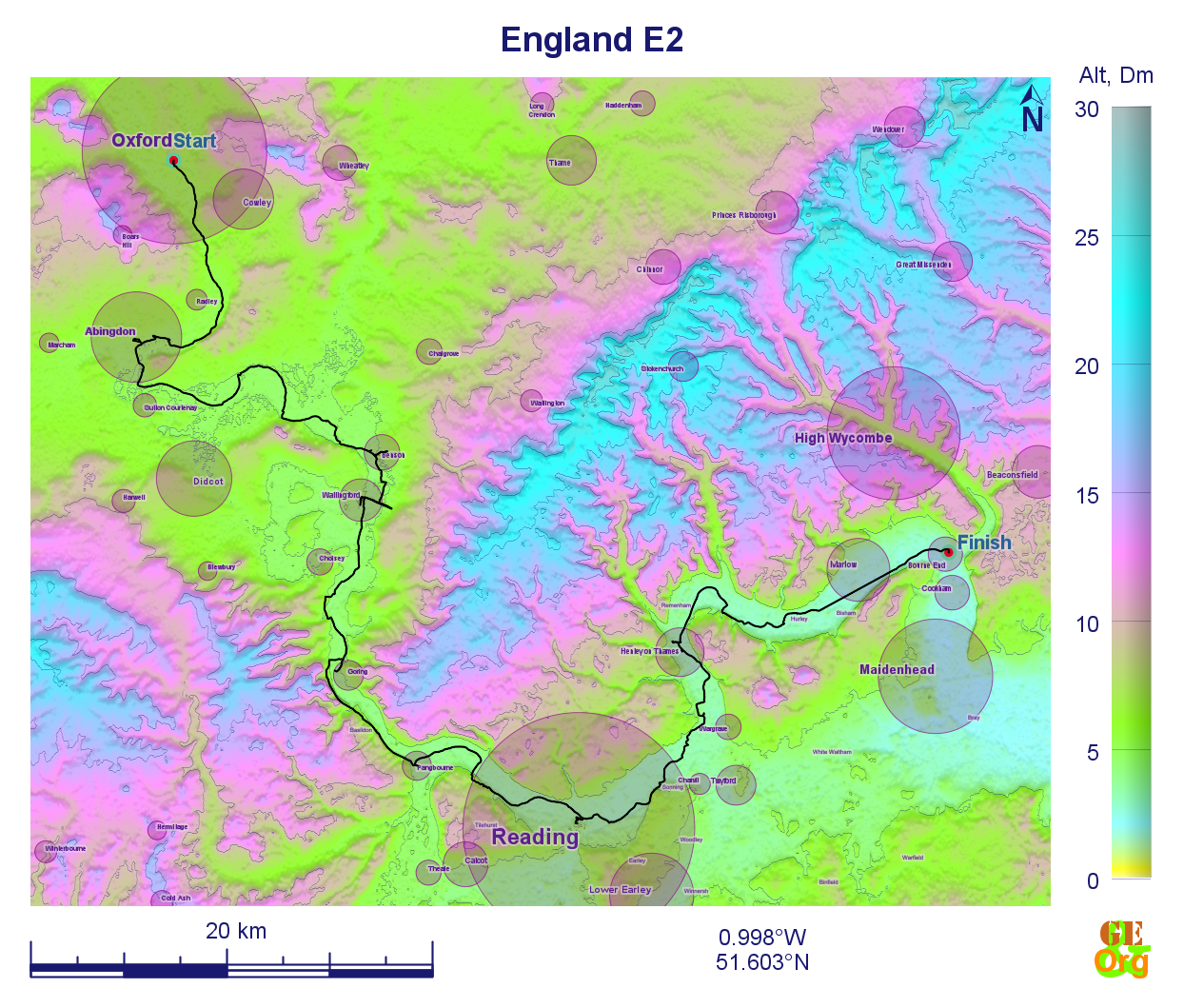
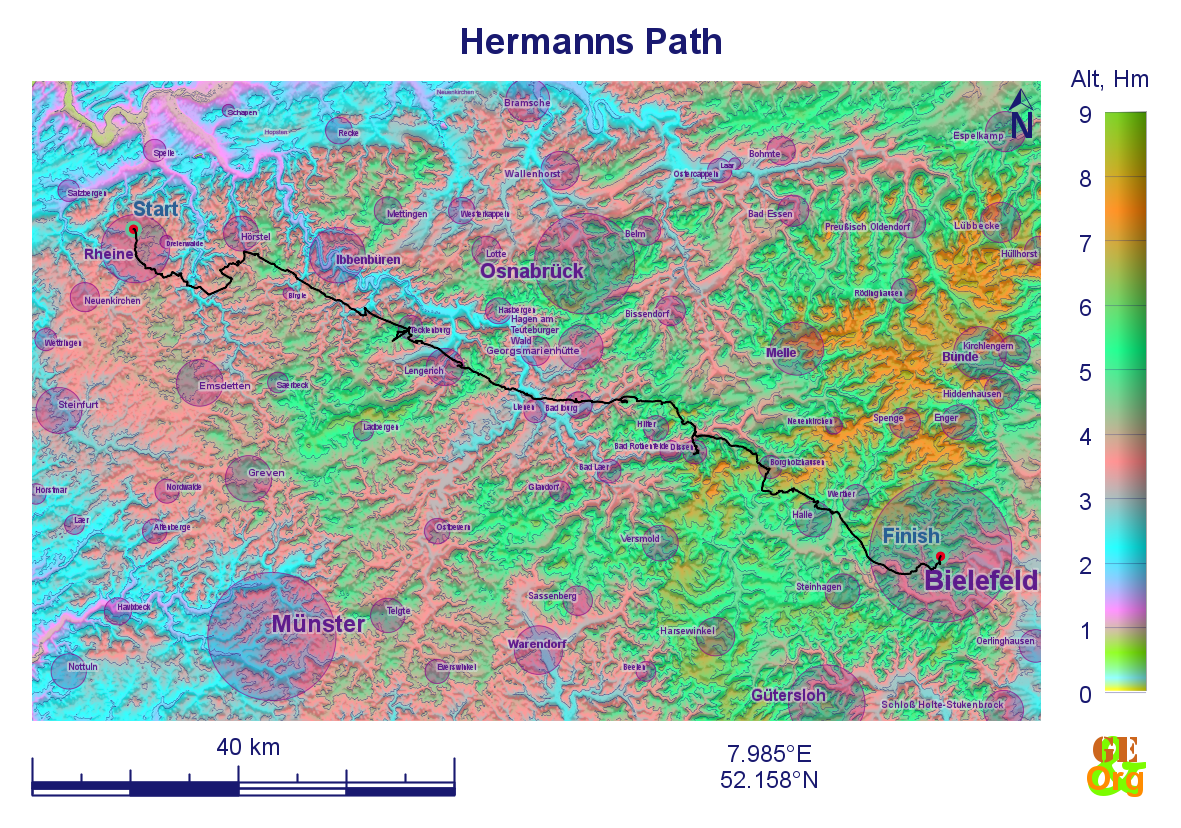
Then I had to think about extending the E6 Path which runs along the old inner German border and further down the German-Czech border as far as Austria (at least to begin with). The major northern sections of this track were completed together with the E1 (Flensburg — Lauenburg) in 2010-11, the middle section around Hannover in 2009-10, and most of the Hessian part in a week in late 2012. In early summer I managed a few more stretches into Bavaria, almost as far as Coburg, before I came off the track and decided to return, only to encounter Deutsche Bahn on its blackest day — a more than two hour delay with crazy rerouting spoils anyone’s holiday.
I had wanted to see whether I could actually make it to Austria in the two week’s holiday I had left, starting from August 15th. Apparently everyone (except Deutsche Bahn apparently) knows that this is a local holiday in Bavaria, and was somewhat surprised that I could get a connection to the place where I had left the track previously. Only. Yeah, right. Trying to book the bus-on-demand revealed that most of the itinerary for that day was, in fact, non-existent.
What to do with two weeks’ holiday? The only thing I could come up with on the spot was to try to continue the E9 (European Coastal Track) from Hamburg where I had left it as the E1 headed south in early 2012. Not as promising as being in the mountains, perhaps, but was able to find some maps and do some preliminary planning, and off I was.
Well, the maps seemed to be accurate every now and then, and then they were way (and I mean, way, way, way) off, as if a couple of waypoints had been tracked with GPS and the rest were just reconstructed from GoogleEarth. At least the tracks seemed to be more or less completely marked on the ground, and with a couple of common-sense interpretations of local tracks, a reasonable path could be charted from A to B, only it was almost never the path on the map. One week took me from Hamburg, over the Elbe into Cuxhaven Land, and on to Bremerhaven, and a further week through Bremerhaven, over the Weser and through East Frisia, and beyond into the Netherlands, where I finished up in late September, having covered over 400 km in 15 days.
I had always had East Frisia in memory as a poor man’s land from my visits to Wilhelmshaven in 1978 and Aurich in the mid 90s, and from the general bad news such as high unemployment, and Aurich’s loss of its railway connection. The surprises started almost immediately after crossing the Weser and encountering a giant factory that manufactures parts for the Airbus factory on the other side of the river. Wilhlemshaven seemed to have been extensively modernised, although there were more than a few very ugly vacant lots not far from the centre of town. A place called Wiesmoor seemed to be quite a bustling boom town (not even a city, but a good two dozen large hotels and a shopping centre of American proportions), and in Leer the whole waterfront had been redeveloped. I imagine it’s wind power that is bringing in the money, but I’d never have thought what a change for the good it would bring.
That’s what travel is for.
