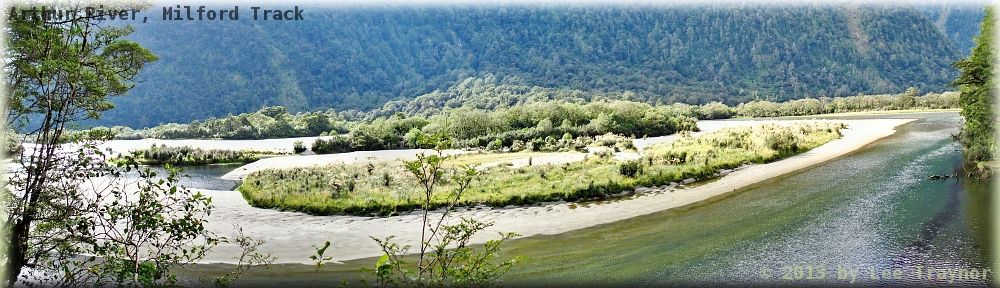
22. Kaikoura – Blenheim

The Grapevine Backpackers, 29 Park Terrace, Blenheim, $56
Sunday, February 24: Sunny throughout
GPS Track

Kaikoura South Beach in all its glory.

Kaikoura South Beach in all its glory.

Was off just after 9:00 this morning and wanted to do the Kaikoura Peninsula Walkway again, so I parked on the Esplanade & started from there. Lovely day for the walk and the tide was low again, so I also redid the panorama. Plenty of seals about and I’m afraid at times I could neither keep the 10 m safety distance nor avoid cutting the critters off from their escape route. Continue reading
5. Auckland

Chinara’s
Quite cloudy but still dry and warm

After breakfast this morning there were a couple of mission critical software issues that had to be dealt with urgently. Raw conversion of images in PPP seems to have a major glitch – the blue channel seems to have taken over. The current version uses ufraw, so the strategy was: 1) exchange ufraw for dcraw and test if it works; 2) should dcraw also fail, the attempt an option of using the jpegs for stacking, advanced tone mapping and thumbnailing; 3) try a reinstall of ufraw 0.18 or an older version; try to determine when the deterioration of ufraw set in. But that was the second problem. Continue reading

4. Auckland

Chinara’s
Wednesday, February 6: A little cold at first, but very sunny with clear skies
GPS Track
Happy Trampers. Auckland Guided Hikers’ Meetup, at Huia

Happy Trampers. Auckland Guided Hikers’ Meetup, at Huia

Up very early for the hike but Camila was up even earlier so she was through with breakfast almost before I started. Made my lunch and packed some bits of apple and a banana as my hiking provisions and was down at the intersection at 8:20. Mike turned up about ten minutes later and we were fairly quickly in Huia for the hike. Quite friendly bloke about my age, and meeting up with the other people showed that all ages were present. A brief round of introductions followed and then the tour leader Stephen had a couple of words to say about the hike. This was to be a bush bash, a wild hike through the undergrowth, with occasional getting lost. Continue reading

2. Auckland

Chinara’s
Monday, February 4: Raining, clearing briefly around lunchtime, but returning in the evening.
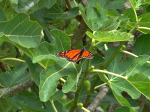
Monarch on Feijoa

Monarch on Feijoa

Slept a good eight hours until the cars were removed from the garages; then waited until the bathroom was free (and everyone out of the house) to make myself some breakfast (coffee, muesli, toast).

Then I decided I needed a couple of extra slides for tonight, so I got those done & practised the presentation once. Now the blog had to be updated, as there had been no publication last Friday. First that gap was filled, and then the blog for tomorrow was scheduled. Continue reading

Kiwi III, 2010

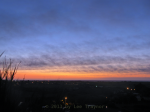
Sunset at Sunset Beach, 2010 (bracket of 47 exposures)

Sunset at Sunset Beach, 2010 (bracket of 47 exposures)

On the success of Kiwi II, I decided that a trip in early spring (August – October) might be the next goal, at least to explore the North Island more fully. I wanted to go to White Island, Cape Reinga, and do the remaining NI Great Walks. Auckland never seems to be cold, and while it was a little wet… It also very much brought back the Augusts and Septembers of fallen-in-love. Continue reading

Purple Picture Processor

Dersch’s A and B vs. Zoom

It seems like we’ll be waiting some time for the camera that takes the view you saw and makes it into a picture on its own. On the way to this goal a number of problems turned up that were solved on the computer. Low dynamic range (high contrast) was improved by bracketing and enfusing; barrelling (radial distortion) by determining the Dersch coefficients (left) and applying a counter-distortion; and chromatic aberration by measuring sets of aberrations (below right) and remapping the colour channels so that they now matched each other. What we might also like to do is process RAW images, save copies of the originals, both as JPG and in a sturdier format such as PNG. And while we’re moving the formats around, taking care that the EXIF data gets transferred too, perhaps a little extra data could be included. Then some postprocessing like Advanced Tone Mapping. And finally, thumbnailing and sharpening so that the images can be experimented with. Oh dear, it seems like Christmas is rather early this year. Continue reading

What CHDK has done for me

After the serendipity of finding CHDK, I set to work on my projects. This is how they turned out.

Grid overlay. Easy, almost trivial to implement, but it’s a great help just having a couple of lines on the screen to check that your horizontal is what you think it is. Continue reading

Camera Extras

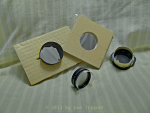
Back: two solar filters, one lens cap. Front: UV/pol filter

Youtube Video

With the camera now functioning like it cost ten times the price thanks to the possibilities of CHDK, it was time to look at a couple of hardware issues.

Filters. A polarisation filter is a major game-changer, as anyone wearing polarised sunglasses can tell, because it cuts down reflection from water and glassy surfaces and thus also the haze in the air that washes out detail at large distances. With a pol filter the sky is bluer, the grass is greener, and the hills are closer. Continue reading

Hacking the Canons: CHDK

CHDK logo by cosmograph

CHDK is a set of tools allowing the user full control over the operation of a large number of the cheaper Canon point&shoot cameras. After all, a camera nowadays is more that a box with a hole in it; everything is, of course, controlled by a microprocessor. With suitable access to the processor, the camera becomes like any other universal machine and can be programmed to do what you like with it. I can vividly remember my disappointment when I thought that I could use the time delay function for a sort of limited time lapse, and all the camera did was wait for the set time and take the ten shots in quick succession. If the camera can count to 30 once, why not continue the process. Continue reading

Searching for a Bracketing Camera

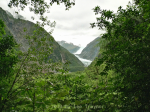
Fox Glacier. Bracket of 7 images from +1 to -1 EV in 1/3 steps.

Before it got all complicated, let’s just go back to the beginning: I wanted a camera that would automatically take exposure series (brackets) so that I could paste them together and achieve a result as good as or better than the eye can see. Without an automatic mechanism, I’d be stuck with taking one shot after another and having to wait for the camera to settle down between each shot. Continue reading